
We Are Already in This Story

There is so much happening. The kind of so much that makes you stop sometimes and ask: is this really our reality right now? People are overwhelmed. Families. Friends. Our community. And yet here we are. Holding onto whatever we can. Trying to stay connected to the earth, to each other, to the work.
And I started asking: does any of this matter? Are we building something connected to anything larger than ourselves? Are there others asking the same questions?
So when the invitation came, I said yes.

The W.K. Kellogg Foundation brought together grantees, organizers, advocates, and thinkers from across the country. Four days at Suncadia Resort in Washington. Surrounded by mountains and nature. Beautiful and expensive. Not everyone gets that invitation. And that needs to be named.
And there was intention behind this choice. This convening was designed with rest and restoration built in. Not as a reward. As a philosophy. Because you cannot pour from empty. And people doing this work rarely get permission to stop.
The first thing they did was not start with the crisis. They started with grounding. We sat in circles. We heard from Wisdom Keepers. We were asked to be present with each other before we were asked to do anything else.
That choice matters. Because what came after was heavy.
The Weight of the Moment
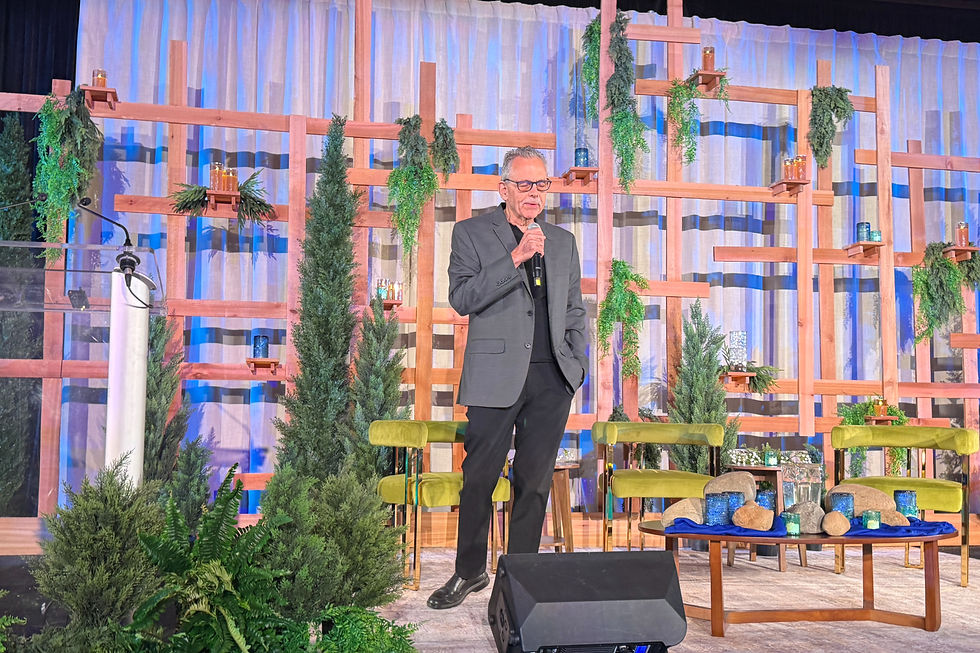
Dr. Manuel Pastor named how we got here. Fifty years of growing inequality. A working class left behind. A middle class more focused on holding onto what it has than building with others. Fear and division do not come from nowhere. They are grown in conditions like these. And he is right. But he also named something I needed to hear. We need each other. Not as charity. As survival. We need everyone's children to do well or the whole thing falls apart. That is not idealism. That is math. And it is also love.
Tarso Ramos has spent over thirty years studying how democracies fall. What he said was not new. But hearing it said plainly still landed hard. We are living through this. We have been watching it happen in real time. And yet he also gave us something practical. We do not need everyone to agree on everything. We need the broadest possible alliance around what democracy actually requires. Do you believe in equality under the law? Do you believe differences should be settled through process rather than intimidation? If yes, we can move together. That is a lower and more honest bar. And it opens the door wider.
From Coalition to Love

Linda Sarsour, a Palestinian American activist and organizer, opened the morning with something I have not stopped repeating since.
If a building fell on a child and she needed ten people to lift it, she would not stop to quiz each person on their politics first. She would not audit their movement history or require ideological agreement. Because the child cannot wait for that conversation. The people most directly harmed by what is happening right now cannot wait for us to decide who is worthy enough to be in the work.
She was also naming something harder. There are people in movement spaces who are more interested in being seen as doing the work than in actually doing it. Who perform solidarity. She asked directly: when her Palestinian immigrant mother in Brooklyn cannot understand what we are saying, who are we actually speaking to?
That landed for me as a practice question, not just a political one. Are we building things that the people most affected can actually walk into?
Rachel Kleinman at the Perception Institute offered a simple reframe. Stop leading with how bad things are. Lead with what is possible. Show people it has been done before. Name what is in the way. Then make a clear ask. That is what moves people toward the work instead of away from it.
Love and Belonging as Design

john a. powell put it plainly. We already belong. Belonging is not something we have to build from scratch. It is something we have to stop blocking. The question is not how do we create it. The question is what gets in the way of seeing what is already there.
Valarie Kaur named the difference between two ways of showing up. One says I am here because of what I get. The other says I am here because you are my sibling. She called it the difference between transactional solidarity and deep solidarity. That distinction has not left me. Because it asks something of me. Which one am I practicing?
Together they named what I believe is the foundation of all of it. Love and belonging are not soft words. They are design principles. How we build matters as much as what we build.
What I Kept Feeling in My Body
Every time someone said "how are the children doing," something shifted in me.
Because I am one of those children. My parents were too. The adults in that room are too.
The child does not go away. They grow up and carry everything with them. And I feel that is missing in how we talk about this work. We kept asking about the children. But we were sitting right there.
I get the ick of paternalism from that framing. It positions children as the ones who need saving while the adults doing the saving are also carrying unhealed things. We are also in process. Still becoming. The work we do with adults, the healing, the listening, the building of new skills and new ways of being with each other, is not separate from the work we do for children. We are those children. That matters for what we build and how we show up.
Battle Creek Is Already in This Story
Everything I heard that week, I recognized.
The nonprofit advocacy breakfast we hosted. The GOTV coalition we are building across Calhoun County. The Embracing Our Shared Humanity pilot, designed as an entry point into relationship, into the practice of seeing each other, into the skills that make shared humanity not just a value but a daily practice.
These are not small local programs trying to catch up to a national movement. They are what the national movement is describing.
We are not watching from the sideline while the real organizing happens somewhere else. We are part of the whole. And the whole depends on us being in it.
That is interdependence. That is belonging. That is what we are growing here.
It is worth fighting for.
Reflections from Wisdom Keepers with Valarie Kaur, Jerry Tello, and Monica Haslip
Deepening the Work
These are the people and organizations I heard from. If something in this piece sparked something in you, I hope you will look them up.
Tarso Ramos, founder, Political Research Associates: politicalresearch.org
Dr. Manuel Pastor, director, Equity Research Institute at USC: dornsife.usc.edu/eri
john a. powell, director, Othering and Belonging Institute at UC Berkeley: belonging.berkeley.edu
Valarie Kaur, founder, Revolutionary Love Project: valariekaur.com
Linda Sarsour, co-founder, MPower Change: mpowerchange.org
Rachel Kleinman, co-president, Perception Institute: perception.org
JustFund, common grant application platform built by funders and organizers of color: justfund.us

Comments